At a glance
- Amplitude, the depth of each stroke, determines how deep the massage feels.
- Stall force tells you how hard you can press before the motor stops.
- Weight and handle shape matter more than the number of attachments.
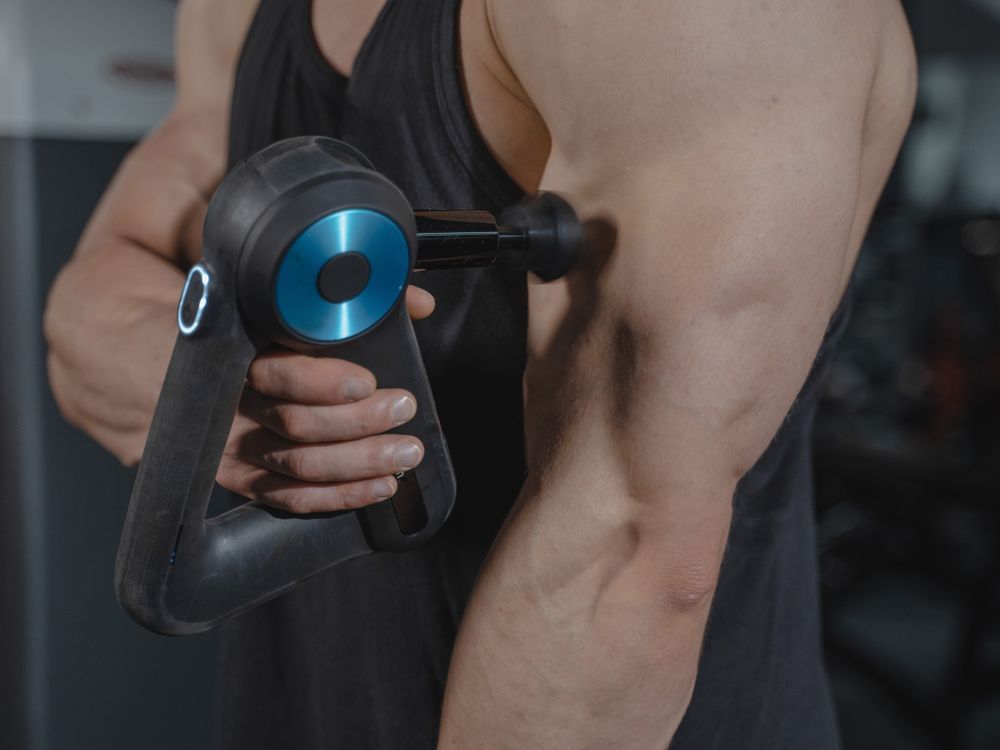
- A massage gun is for sore, tight muscles, not for injuries.
The three numbers that matter
Amplitude is how far the head travels with each stroke, usually between 10 and 16 millimetres. Shorter strokes feel like strong vibration on the surface. Longer strokes reach deeper into large muscles such as the thighs and glutes.
Stall force is the pressure the motor can take before it stops, often quoted between about 20 and 60 pounds. If you like firm pressure or have dense muscle, a low stall force will be frustrating. Speed, given in percussions per minute, typically ranges from around 1,700 to 3,200; having three or four well-spaced levels is more useful than a dozen.
Noise, weight and handling
Early massage guns were loud. Modern brushless motors are much quieter, with many models in the range of a normal conversation or lower. If you plan to use it while watching television or near others, look for a stated noise level and treat it as a guide rather than a guarantee.
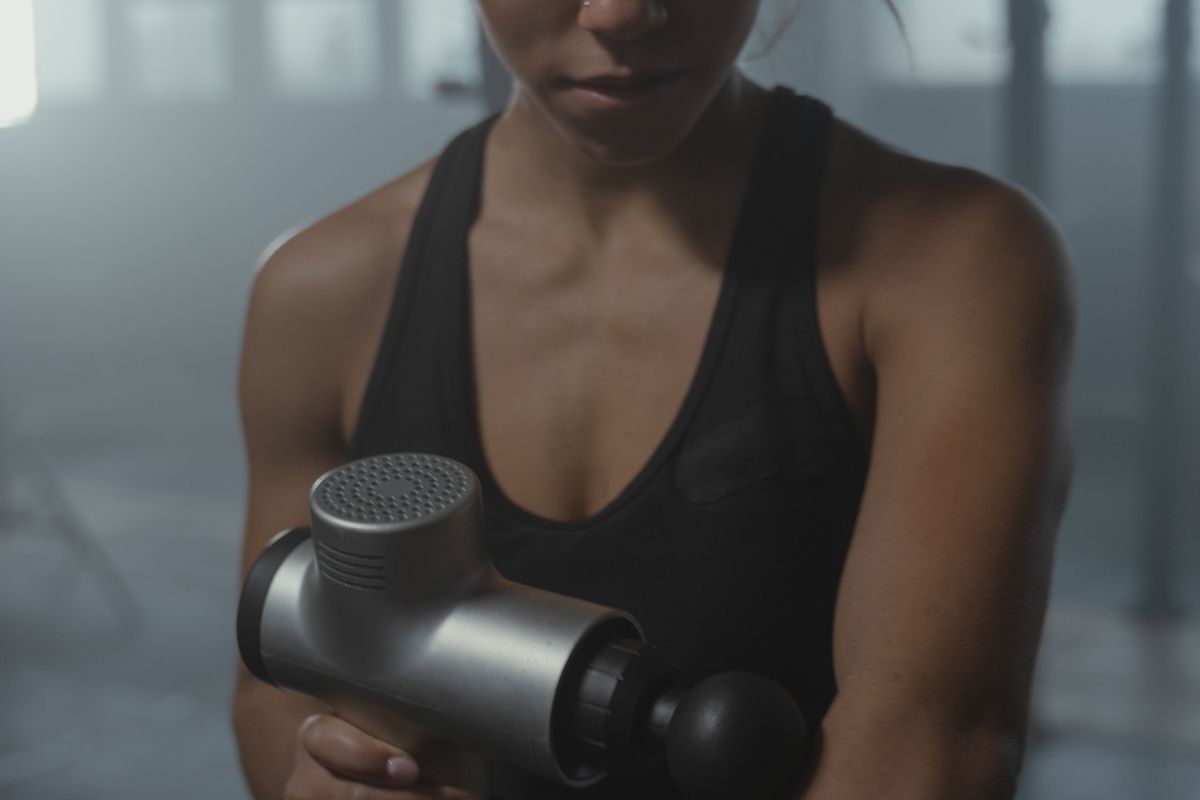
Full-size guns usually weigh between 1.5 and 2.5 pounds. That sounds light, but holding it at arm's length to reach your back gets tiring. An angled or multi-grip handle makes self-use much easier. Mini models under a pound and a half are ideal for travel and lighter use, with shorter amplitude and less force.
Attachments you will actually use
Most kits include a handful of heads, and two or three do nearly all the work.
- Ball: the general-purpose head for large muscle groups.
- Flat: spreads pressure evenly, good for denser areas such as the chest and thighs.
- Bullet: targets small knots; use it briefly and gently.
- Fork: designed to straddle areas such as the calves, avoiding direct pressure on bone.
- Cushioned or soft head: for tender spots and beginners.
Using one sensibly
Keep the gun moving slowly along the muscle and spend a minute or two per area. Stay off bones, joints and the front of the neck, and let the tool do the work instead of forcing it in.
Do not use a massage gun on an acute injury, a suspected strain or tear, or areas of swelling. If you have a medical condition, are pregnant or take blood-thinning medication, speak to a doctor or physiotherapist first.
Full-size versus mini
| Full-size | Mini | |
|---|---|---|
| Amplitude | 12 – 16 mm | 6 – 10 mm |
| Stall force | 35 – 60 lb | 15 – 30 lb |
| Weight | 1.5 – 2.5 lb | About 1 lb |
| Best for | Large muscles, regular training | Travel, desk tension, lighter use |
Who it suits
A good choice if
- You train regularly and want quicker relief from tight muscles
- You already use a foam roller and want something more targeted
- You sit for long hours and carry tension in your shoulders and legs
Think twice if
- You are dealing with an injury that has not been assessed
- You prefer gentle pressure; a roller or massage ball may suit you better
- You need to reach your mid-back alone and have limited shoulder mobility
Questions
How long should I use it on one area?
One to two minutes per muscle group is a common recommendation. Longer is not better and can leave the area sore.
Should I use it before or after exercise?
Both are common. A brief, light pass before activity as part of a warm-up, and a slower session afterwards for recovery.
How long does the battery last?
Typically two to six hours of run time depending on the model and speed, which is weeks of normal use between charges.
The bottom line
Pick amplitude and stall force to match the pressure you like, then choose the model that is comfortable to hold. Extra attachments and speed levels add little.
How this guide was made. It is based on published specifications and general product research, not laboratory testing. Prices are approximate, in US dollars, and change often. It is general information, not professional advice.