At a glance
- Airflow dries hair; heat mainly helps shape it. Fast air at moderate heat is gentler.
- Separate heat and speed controls plus a cool shot cover almost every need.
- Weight and balance matter if drying takes you more than a few minutes.
- The right attachment for your hair type makes more difference than brand.
Motor and airflow
Wattage is the number on the box, usually between 1,600 and 1,875 watts for full-size dryers in the United States, but it describes power drawn, not how well the dryer moves air. Airflow speed and volume are what shorten drying time.
Traditional dryers use a brushed AC or DC motor in the barrel. AC motors are powerful and durable but heavy; DC motors are lighter and found in budget and travel models. Premium dryers increasingly use compact brushless motors, often placed in the handle, which spin faster, weigh less, last longer and produce a strong, focused airstream.
Heat settings and hair health
High heat on already dry hair is what does the damage. A dryer with at least three heat levels and two speeds, controlled separately, lets you use high airflow with medium heat, which suits most hair. Fine or colour-treated hair benefits from the lowest effective heat.
The cool shot button is not a gimmick: a blast of cool air at the end helps set the shape. Some higher-end dryers monitor air temperature many times a second to prevent overheating, which is useful if you dry your hair daily.
Ionic, ceramic and tourmaline
Ionic dryers emit negative ions that help break up water and reduce static, which can leave thick or frizz-prone hair smoother. On very fine hair, the same effect can reduce volume, so a dryer that lets you switch the ionic function off is handy.
Ceramic and tourmaline refer to coatings on internal parts intended to spread heat more evenly. They are common across price ranges and are a sensible baseline, not a reason to pay much more.
Attachments and practical details
Choose attachments by hair type and check the small details you will notice every day.
- Concentrator nozzle: directs air for smooth, straight styles.
- Diffuser: spreads air gently to define curls and waves without frizz.
- Weight: around a pound is comfortable; heavier dryers tire the arm on long hair.
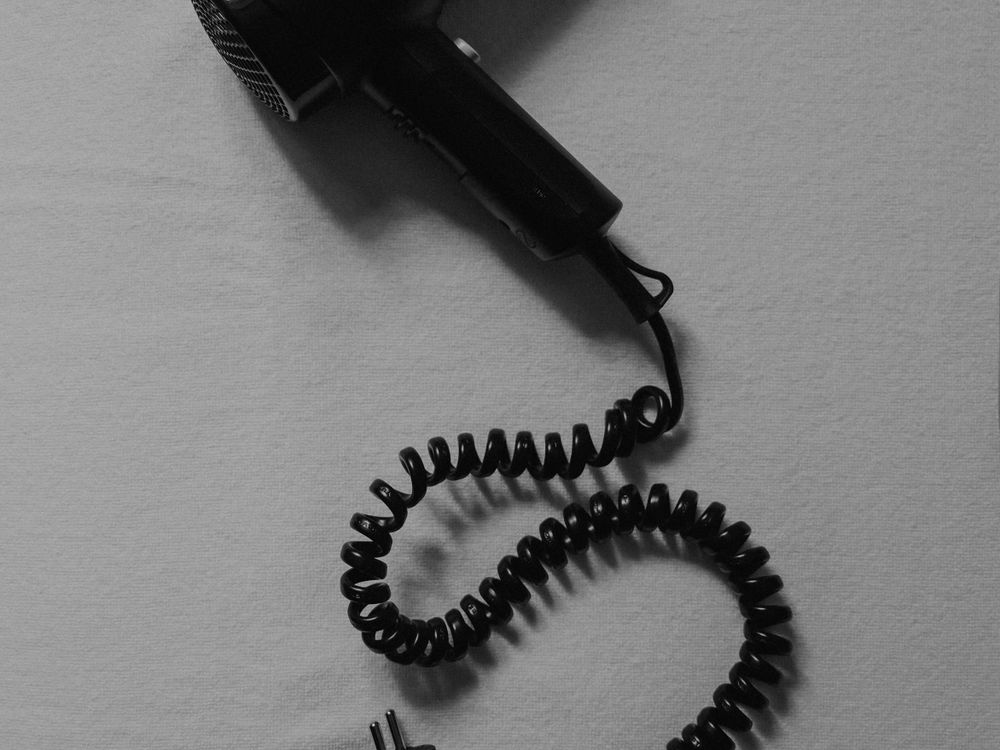
- Cord length: at least six feet makes a real difference in front of a mirror.
- Removable filter: lint build-up reduces airflow and shortens motor life, so clean it regularly.
What to look for by hair type
| Hair type | Settings | Attachment |
|---|---|---|
| Fine or thin | Low to medium heat, ionic off if possible | Concentrator, used at a distance |
| Thick or coarse | High airflow, medium to high heat, ionic on | Concentrator |
| Curly or wavy | Low speed, low to medium heat | Diffuser |
| Colour-treated or damaged | Lowest effective heat, finish with cool shot | Either, with heat protectant |
Who it suits
A good choice if
- Your current dryer has one heat setting or takes too long
- You dry your hair several times a week and want less heat exposure
- You have thick or long hair and would benefit from stronger airflow
Think twice if
- You air-dry most days and use a dryer occasionally; a basic model is enough
- You are paying extra only for the number of attachments
- You travel abroad often and need dual voltage, which many full-size dryers lack
Questions
Is a more expensive hair dryer worth it?
Up to a point. The step from a basic dryer to a mid-range one with good airflow and separate controls is noticeable. Beyond that you mostly pay for lighter weight, lower noise and finish.
Can I use my dryer in another country?
Only if it is dual voltage. A single-voltage dryer on the wrong supply can overheat or fail, even with a plug adapter.
How long should a hair dryer last?
With a clean filter, several years of regular use is typical. Brushless motors are generally rated for a longer life than brushed ones.
The bottom line
Look for strong airflow, separate heat and speed controls, a cool shot and the right attachment for your hair. Pay more only if lighter weight and quieter running matter to you.
How this guide was made. It is based on published specifications and general product research, not laboratory testing. Prices are approximate, in US dollars, and change often. It is general information, not professional advice.