At a glance
- Comfort when you first put the shoe on is the most reliable guide.
- Leave about a thumb's width between your longest toe and the end of the shoe.
- Heel drop changes how the shoe feels underfoot; change it gradually, not suddenly.
- Most daily trainers last roughly 300 to 500 miles.
What a daily trainer is
Running shoes are built for different jobs. Racing shoes are light and stiff, trail shoes have deep lugs and protection, and daily trainers sit in the middle: enough cushioning and durability for most of your weekly miles. If you are buying one pair for regular running, walking and the gym, a daily trainer is the category to look at.
Within it you will see neutral and stability shoes. Neutral shoes let the foot move naturally. Stability shoes add firmer foam or guide rails along the inside edge to reduce inward roll. If you have no history of problems, a neutral shoe that feels comfortable is a reasonable starting point.
Stack height and heel drop
Stack height is the amount of material between your foot and the ground. Higher stacks feel softer and more protective over long distances; lower stacks feel more connected and stable.
Heel-to-toe drop is the height difference between the heel and forefoot, measured in millimetres. Traditional trainers sit around 8 to 12 mm, and lower-drop shoes range from 0 to 6 mm. Lower drops shift more load to the calves and Achilles. If you switch from a high-drop to a low-drop shoe, ease into it over several weeks.
Getting the fit right online
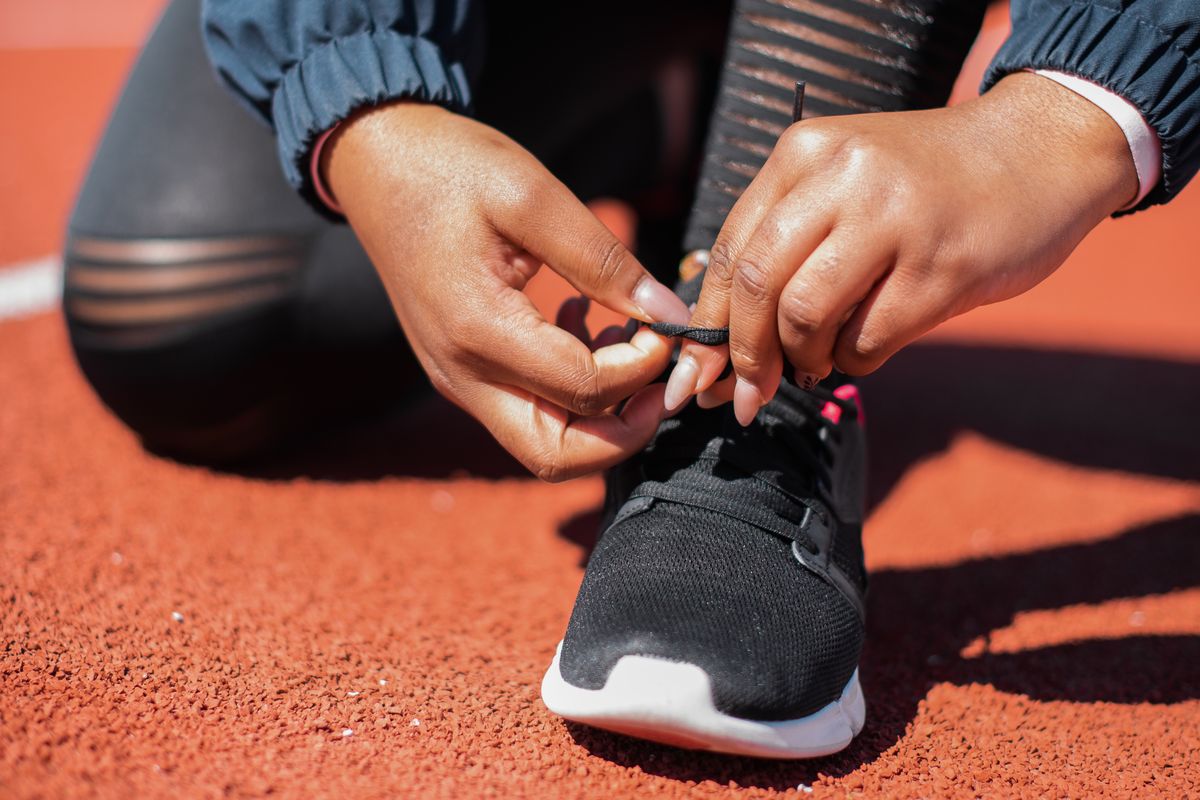
Feet swell through the day and during a run, so try shoes on in the afternoon with the socks you run in. You want about a thumb's width of space beyond your longest toe, a snug midfoot and a heel that does not lift. Many runners end up half a size larger than their everyday shoes.
Width matters as much as length. If the upper bulges over the sole or your little toe presses against the side, look for a wide version instead of sizing up. When buying online, check the returns policy first and test new shoes indoors so they can go back clean.
When to replace them
Midsole foam compresses with use even when the upper still looks fine. A common guideline is 300 to 500 miles, with lighter runners and softer surfaces at the upper end. Signs that a pair is done include a flat, dead feel, visible creasing in the midsole, worn-through outsole rubber and new aches after routine runs.
Rotating two pairs lets the foam recover between runs and gives you a reference point for when one pair has worn out.
Heel drop at a glance
| Drop | Feel | Often preferred by |
|---|---|---|
| 0 – 4 mm | Flat, natural, more calf load | Midfoot and forefoot strikers, experienced runners |
| 5 – 8 mm | Balanced | Runners wanting a versatile middle ground |
| 9 – 12 mm | Cushioned heel, traditional | Heel strikers, beginners, those with tight calves |
Who it suits
A good choice if
- You run or walk several times a week and want one dependable pair
- Your current shoes are past 400 miles or feel flat
- You know your size and width in running shoes, or can return easily
Think twice if
- You mainly lift weights; a flatter, firmer training shoe is more stable
- You run mostly on rough trails and need grip and protection
- You have persistent pain; see a physiotherapist or podiatrist before changing shoes
Questions
Do I need a gait analysis?
It can be helpful but is not essential. Research generally supports choosing the shoe that feels most comfortable to you.
How should running shoes be cleaned?
Brush off dry dirt, wash by hand with mild soap and air-dry away from direct heat. Machine washing and dryers shorten the life of the foam and glue.
Are heavier shoes worse?
Not for daily miles. Extra weight usually means more cushioning and durability. Light weight matters mainly for racing.
The bottom line
Choose the daily trainer that feels comfortable straight away, in the right length and width. Treat drop and stack height as preferences to adjust slowly.
How this guide was made. It is based on published specifications and general product research, not laboratory testing. Prices are approximate, in US dollars, and change often. It is general information, not professional advice.